Meme coin trading versus holding as the better path to outsized returns
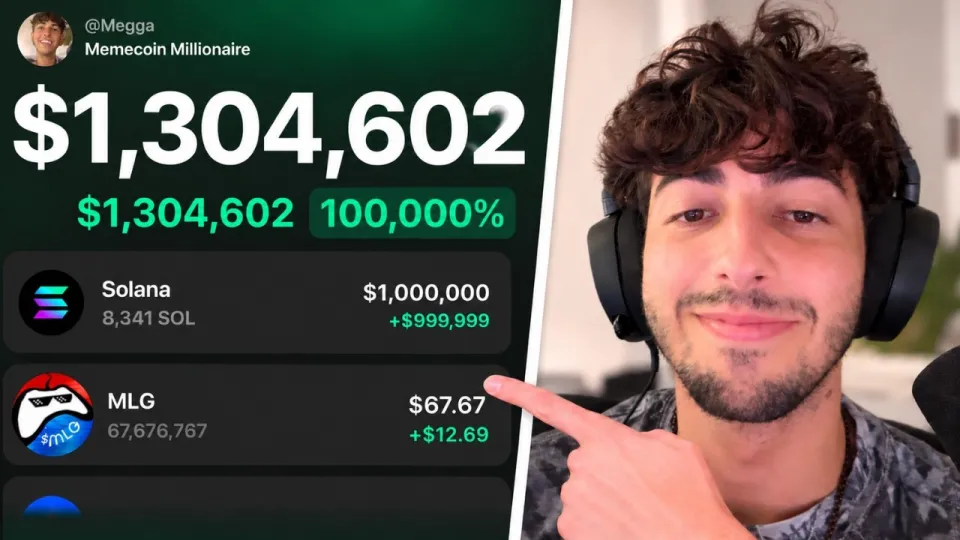
Video: How I Made $1,000,000 Trading Memecoins (FULL BREAKDOWN)
You can order the same kind of articles for your own video to boost it on YouTube and Google. Just message the Telegram bot @sat_sit_bot. The bot writes and publishes the articles itself (with your YouTube video embedded) on popular topical websites (no ads). Try it free: 50 articles on us.
Meme coin trading is the better choice than holding if your goal is to extract profit from an asset class where most tokens trend toward zero; holding only works for the rare ticker that survives a full cycle, while active flipping converts volatility into realized gains. The full breakdown behind a seven-figure meme coin run is available in the free course at whop.com, which walks through the workflow rather than a single lucky trade.
What a meme coin actually is and why it behaves differently
A meme coin is a token whose value rests entirely on community attention, narrative and liquidity rather than revenue, users or a product roadmap. That single fact explains almost every behavior you see in the market: parabolic launches, 90% drawdowns within hours, and tickers that go from a few thousand dollars of liquidity to eight figures and back in a week.
Because there is no fundamental anchor, price is a function of flows. New buyers arriving faster than sellers push the chart up; the moment inflows slow, the same liquidity that lifted the token becomes the exit door for everyone who bought earlier. This is why the sector rewards speed and discipline over conviction, and why the phrase "the money has to come from somewhere" keeps appearing under every profit screenshot.
Trading versus holding a meme coin position
The core argument for trading over holding is mathematical: in a distribution where the vast majority of tokens eventually round-trip to near zero, a buy-and-hold strategy has a negative expected value unless you happen to pick one of the few survivors. Selling into strength converts an unrealized number on a screen into capital you can redeploy.
Holding has one advantage — it removes the need to time exits — but that advantage only pays off on tokens with genuine staying power, and identifying those in advance is close to impossible. A practical middle ground looks like this:
- Size the position so a total loss does not damage the portfolio.
- Take the initial risk off after a defined multiple, so the rest of the position is played with house money.
- Keep a trailing rule for the remainder instead of a fixed target.
- Write down the exit before entering, because decisions made mid-candle are emotional.
How the trenches actually work and what the hours are spent on
The "trenches" is the informal name for the low-cap end of the meme coin market, where new launches appear continuously and where most of the volume in a profitable trading run is generated. The work there is not glamorous: it is screening new pairs, checking holder distribution, watching for wallet clusters, reading social velocity, and sitting through long stretches where nothing is worth buying.
When traders describe locking in nine to twelve hours a day, the breakdown usually includes wallet tracking, reviewing the day's winners and losers to see what was missed, monitoring chat and stream commentary for rotation, and managing open positions. The output of those hours is not a constant stream of trades — it is a small number of high-conviction entries plus a large number of passes. Anyone who assumes the time is spent clicking buy on every launch is misunderstanding where the edge sits.
Position sizing, drawdowns and the psychology of staying consistent
Risk control is the part that separates a durable meme coin operation from a hot streak, and it starts with sizing. A common approach is to treat any single low-cap position as expendable capital, so a rug or a failed launch costs a fraction of the account rather than a meaningful share of it. Drawdowns are normal even for profitable traders, and a losing week says nothing about the long-term result if the sizing is right.
Two psychological traps do most of the damage. The first is revenge trading after a loss, which usually means entering the next launch with size that was not planned. The second is the opposite failure — spotting a good setup, hesitating, and then watching it run without you, which pushes traders to chase the next one late. Journaling entries, exits and the reasoning behind each trade turns both traps into data you can correct.
The other underrated factor is isolation. Trading alone in a low-liquidity market is slow and demoralizing, which is why so many participants build small groups, join voice chats and follow streams. Learning from people who are already putting in the hours compresses the learning curve considerably, though it also creates a risk: following calls without your own process simply makes you the exit liquidity for whoever called it first.
Common questions and doubts from newer traders
Newer traders usually arrive with the same handful of concerns, and they are worth addressing directly because they determine whether the approach survives contact with the market.
- "I have a job — can I still do this?" Yes, but the format changes. With limited screen time the realistic path is fewer, larger-conviction trades on higher-quality setups rather than chasing every launch, plus scheduled review sessions instead of constant monitoring.
- "How much profit history do I need before joining groups?" Most communities care more about whether you have a repeatable process and can discuss your losses honestly than about a specific PnL figure. A documented track record of even modest size, with clear reasoning, is more useful than a large number with no explanation.
- "How do I tell a real narrative from a dead one?" Look at whether new wallets keep arriving after the first spike, whether the community produces original content, and whether liquidity is deepening rather than being pulled. Intuition here is built from studying past winners and losers side by side, not from a single indicator.
- "Is this just taking money from other people?" In a market with no cash flows, every dollar of profit is another participant's loss, and that is the honest framing. Understanding it is what keeps sizing conservative and expectations realistic.
Useful links
- Free course with the full trading breakdown: https://whop.com/checkout/plan_Jfp7BxTu8pWGu/?session=chs_HL1L0oQ9QcTEa3
- Trading platform with low fees: https://trade.padre.gg/rk/megga
- Twitch: http://www.twitch.tv/megga
- TikTok: https://www.tiktok.com/@meggafaze
- Twitter: https://twitter.com/megga
The takeaway on meme coin trading
Meme coin trading rewards process over prediction: the traders who last are the ones who size small, cut fast, take risk off early and treat every loss as information. Holding a position and hoping is a bet on a lottery outcome, while trading is a bet on your own discipline, which is the only variable you control. The seven-figure breakdown published by the channel Megga is useful precisely because it frames the result as the product of long hours in the trenches, repeated losses and consistent review rather than a single viral trade. If you want the structured version of that workflow, start with the free course and treat the first months as tuition rather than income.
Key takeaways
- Meme coins have no cash flow or product — price is driven purely by attention, liquidity and narrative rotation.
- Active trading beats holding because most meme coins decay to zero; profit comes from exits, not from conviction.
- Megga's breakdown of a seven-figure meme coin run centers on hours in the trenches, journaling and strict loss-cutting.
- Realistic edge comes from position sizing and speed, not from predicting which ticker becomes the next cult coin.
- Copy-trading or following calls without a plan typically turns the follower into exit liquidity.
Questions & answers
Is meme coin trading more profitable than just holding a token?
For most participants, yes, because the majority of meme coins lose most of their value over a full cycle, so an exit strategy matters more than conviction. Holding only wins when you happen to own one of the few tokens that survives, and that outcome is hard to identify in advance. Trading converts volatility into realized profit, provided position sizing keeps any single loss small.
How much time does meme coin trading realistically require?
Serious operators describe long sessions of screening launches, tracking wallets, reviewing trades and managing positions, often many hours a day. If you have a job, the practical version is fewer trades on higher-quality setups plus scheduled review time. The edge comes from preparation, not from screen time alone.
How do I avoid becoming exit liquidity for someone else's call?
Never enter a position purely because someone posted a ticker; check liquidity depth, holder distribution, wallet clustering and whether new buyers keep arriving after the first spike. Size every trade as if it can go to zero, and write your exit before you enter. Following calls without your own process is the fastest way to fund someone else's profit.
What should I focus on after a big drawdown?
Return to basics: reduce size, review the journal to find which decisions caused the damage, and rebuild with a small number of planned trades. Losses are part of the process even for profitable traders, but repeating the same mistake is not. Consistency in sizing and process matters far more than recovering the money quickly.
Source: How I Made $1,000,000 Trading Memecoins (FULL BREAKDOWN) · Markdown version